
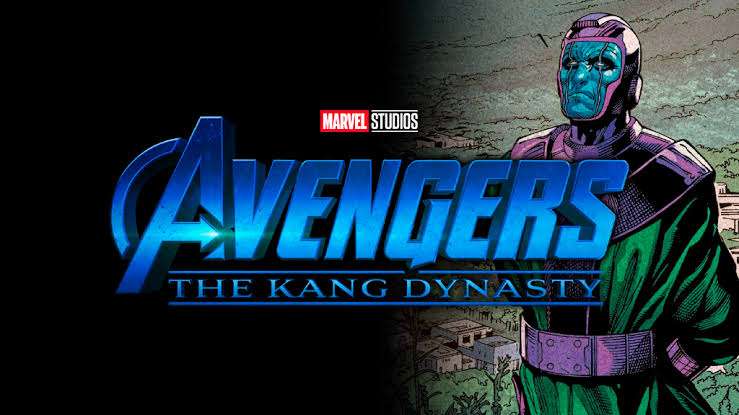
When Marvel quietly shifted the plan from Avengers: The Kang Dynasty to Avengers: Doomsday, it wasn’t just a cosmetic title change; it was a warning that the multiverse story is about to be rebuilt around Victor von Doom instead of Kang. Kang was originally framed as the next Thanos‑level threat, but Doom is a different beast entirely: less a time‑conquering nomad and more a self‑appointed curator of reality who believes only his will should define existence.
Table of Contents
From Kang to Doom: Why the Pivot Matters
Kang is fragmentation made flesh: endless variants, endless futures, all competing to dominate the same cosmic board. Doom, on the other hand, represents ruthless cohesion. Where Kang multiplies possibilities, Doom wants to eliminate them until only the version of reality he approves survives.
That difference changes the tone of the entire arc. A Kang‑centric saga feels like a multiversal cold war, full of shifting alliances and enemy variants popping up from every timeline. A Doom‑centric film called Doomsday signals something more final: judgment day for the multiverse itself, handed down by one man who thinks he has the right to choose which worlds live and which die.
The “Timestamp Theory” in MCU Trailers
Enter the fan‑driven “Timestamp Theory,” which has turned every MCU trailer into a kind of meta‑puzzle. The theory claims that specific timecodes, paused frames, and even cuts that land on numbers like 6:16 or 8:38 are intentional clues—pointing to Earth‑616, Earth‑838, or key multiversal events.
Even if Marvel doesn’t intend every frame to be a cipher, the studio clearly understands how the fandom watches now. A lingering shot of a clock, a quick digital display, or a cut timed to a familiar number can signal that a scene belongs to another universe, an incoming incursion, or a doomed branch of the Sacred Timeline. As we move toward Doomsday, trailers stop functioning as pure hype and start acting like a guided tour through the fractured MCU map.
Endgame’s Time Heist: The Fallout We’re Still Living In
All of this rests on a single turning point: the Time Heist in Avengers: Endgame. The Avengers didn’t just fight Thanos; they rewrote the rules of cause and effect for their entire franchise. They stole Stones from their own past, altered key historical moments, and then trusted that a few time‑travel caveats from the Ancient One would keep everything neat and tidy.
Later projects showed that was wishful thinking. Loki introduced branching timelines as a natural consequence of free will. He Who Remains revealed that someone had been pruning those branches for ages just to prevent something even worse from taking over. By the time we get to a film called Doomsday, the Time Heist looks less like a victory lap and more like the original sin of the Multiverse Saga: a heroic act that destabilized reality on a scale nobody understood.
This is where Doom fits perfectly. Kang can be framed as the immediate symptom of the timeline breaking—an opportunist thriving in chaos. Doom, however, is the long‑term response: the man who studies that chaos, decides it is intolerable, and begins shaping its fragments into a single, terrifying order, potentially culminating in something like Battleworld.
RDJ as an Earth‑838 Variant: Iron Man as a Multiversal Wild Card
Now add Robert Downey Jr. back into the mix as an Earth‑838 variant, and the narrative potential jumps. The original Tony Stark died closing the book on the Infinity Saga. A multiversal Tony doesn’t erase that sacrifice; instead, he becomes a commentary on it. He’s living proof that some echoes of Tony still have to live with the fallout of what the Avengers did to time.
This variant Stark could be a moral and thematic Swiss army knife:
- He could be a harsher, more authoritarian Tony, shaped by incursions and multiversal disasters we haven’t seen yet.
- He could serve as Doom’s reluctant rival—someone who understands the stakes but refuses to go as far as Doom in “fixing” reality.
- He could act as the audience’s guide, explaining incursions, broken timelines, and looming collapse with the same mix of charm and dread that made him the heart of the early MCU.
Because viewers instinctively trust RDJ in this universe, Marvel can use him to deliver heavy lore without it feeling like a lecture. When this Tony looks at the Earth‑616 heroes and says, “You don’t realize what your Time Heist did to us,” it hits harder than any cosmic narrator ever could.
Franklin Richards: The Catalyst Waiting in the Wings
If Doom is the architect of Doomsday, Franklin Richards is the dangerous raw material he wants to control. In the comics, Franklin is a reality‑warper—someone who can create entire universes, rewrite existence, and casually bend the rules that gods have to obey. Translating that into the MCU gives Marvel a perfect “catalyst” character: a person whose sheer existence explains both the fragility and the potential of the multiverse.
Centering Franklin in a Doom story does three powerful things:
- It personalizes the conflict. Doom’s obsession stops being abstract and becomes a twisted form of guardianship: he wants to “protect” reality by owning the one being who can remake it.
- It fuses the Avengers plotline with the Fantastic Four. Franklin anchors Doom to Marvel’s first family, letting Secret Wars feel like an emotional culmination, not just another gigantic crossover.
- It gives Marvel an in‑universe way to adapt wild Secret Wars concepts without inventing new cosmic artifacts from scratch; Franklin himself is the cosmic artifact.
A frightened, traumatized Franklin—someone who knows his power has already destroyed or reshaped universes—becomes a natural pressure point for Doom to exploit and the heroes to protect.
Doomsday vs. Kang Dynasty: How the Story Shape Changes
So what story do you tell with Doomsday that you couldn’t tell with The Kang Dynasty? Under a Kang banner, the arc leans toward a war of attrition against countless variants, a sprawling chess match spread across time. Under a Doom banner, the tone hardens into something closer to a verdict.
Kang stories are largely about survival and strategy: outthinking a time‑hopping empire. Doom stories are about justification and judgment. Doom doesn’t just want to win; he wants to prove that his vision of order is the only valid one—and that every messy, branched, contradictory universe deserves to be culled if it doesn’t align.
That shift reframes the heroes’ job. They’re no longer just trying to stop an invasion; they’re trying to argue, through action and sacrifice, that free will, broken timelines, and imperfect choices are still worth defending. The question at the heart of Doomsday becomes: does the multiverse need a tyrant to survive, or is the chaos of different worlds and different choices the point?
The Road to Secret Wars
When you connect all the threads—the Timestamp Theory, Endgame’s Time Heist fallout, an Earth‑838 Tony Stark, and Franklin Richards as a living key—you can see the road to Secret Wars taking shape piece by piece. Every trailer hint, every “wrong” version of a familiar character, every reference to incursions becomes part of a larger conversation about who should have the right to decide what existence looks like.
Kang may have been the spark that ignited the multiversal blaze, but Doom is being positioned as the one who wants to decide how, and if, the fire burns out. If Marvel follows through on the promise of a title like Avengers: Doomsday, the film won’t just be another team‑up. It will feel like a final judgment on everything the MCU has done since the Avengers first chose to break time in order to save it.