
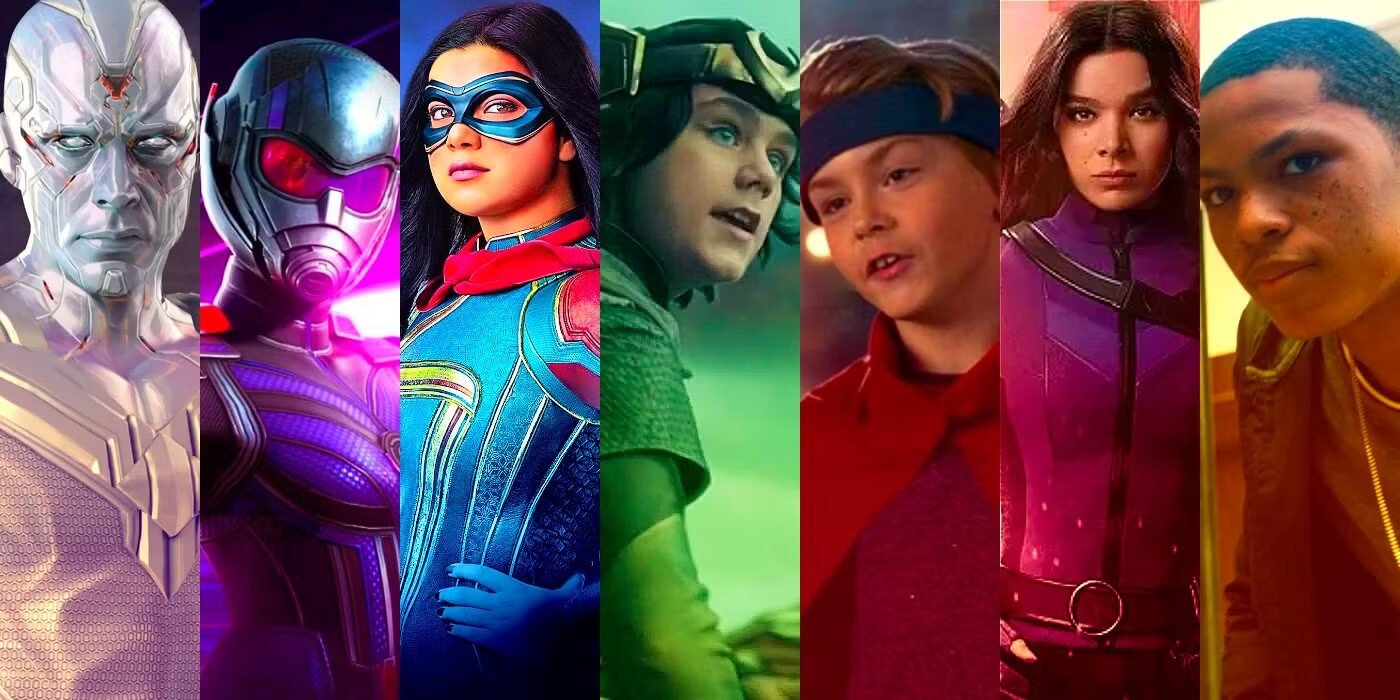
THE POWER GAP: 2012 VS. 2026
The average power level of Marvel’s core heroes has dropped significantly since the Infinity Saga.
| Role | Infinity Saga (2012) | Multiverse Saga (2026) |
|---|---|---|
| The Tech Genius | Iron Man (Nanotech God) | Riri Williams (Prototype Armor) |
| The Archer | Hawkeye (Veteran Assassin) | Kate Bishop (Rookie Student) |
| The Soldier | Captain America (Super Soldier) | Falcon (Normal Human) |
Table of Contents
Why did the MCU start focusing on weaker heroes after Avengers: Endgame?
After Avengers: Endgame, Marvel Studios deliberately shifted gears. Instead of immediately replacing Iron Man or Thor with equally godlike figures, the Multiverse Saga leaned into more grounded, vulnerable heroes. Phases 4 and 5 explored “street-level” characters who rely on skill, training, or limited powers rather than cosmic strength.
According to Screen Rant, this creative choice added realism, but it also meant several new heroes rank historically low on the MCU power scale, even as they move toward major cosmic team-ups like Avengers: Doomsday.
Is Werewolf by Night really that powerful?
Despite the intimidating concept, Jack Russell (Werewolf by Night) is far from unstoppable. His abilities depend heavily on the lunar cycle and emotional control. Outside of his werewolf form, he is essentially a normal human.
Even in monster form, his power is raw and uncontrolled. Unlike the Hulk, who retains some tactical intelligence (especially as Smart Hulk), Jack is a berserker. This makes him dangerous but inconsistent compared to high-tier MCU heavy hitters.
Why is Falcon considered one of the weakest Avengers?
Joaquin Torres, who officially inherited the Falcon wings in Captain America: Brave New World, has no superhuman abilities. In the comics, Torres is a human-bird hybrid with a regenerative healing factor. In the MCU, however, he is a regular Air Force lieutenant.
Like Sam Wilson before him, he relies entirely on technology, flight mechanics, and military instincts. Against enhanced beings, magic users, or cosmic threats, Falcon remains extremely vulnerable. His value lies in aerial support, not raw combat dominance.
Does Swordsman stand a chance against enhanced villains?
Jack Duquesne, introduced in Hawkeye, is a skilled fencer but nothing more. He possesses no enhanced durability, speed, or healing. His age and lack of powers place him at a severe disadvantage, even at the street level, especially compared to characters like Daredevil or Echo who have heightened senses or mimicry abilities.
Is Kate Bishop too inexperienced to be a top-tier hero?
Kate Bishop is exceptionally talented, but talent does not equal power. She is a normal human facing increasingly dangerous threats. While her archery and combat skills are impressive, she lacks the decades of black-ops experience that Clint Barton had.
As noted by Collider, her “rookie status” is a defining character trait. She is prone to mistakes and injury, keeping her far from the MCU’s upper ranks until she gains more battlefield experience.
Why is Yelena Belova still considered weak despite her popularity?
Yelena Belova, the standout of Black Widow and Thunderbolts*, is lethal but ultimately human. Her training rivals Natasha Romanoff’s, yet she lacks the enhancements of a Super Soldier or the tech of an Iron Man.
Against superpowered enemies, her survival depends entirely on tactics, gadgets, and luck. In a universe now populated by Eternals and Mutants, a master assassin is surprisingly fragile.
What made White Tiger’s MCU run so brief?
Hector Ayala’s White Tiger, who appeared in Daredevil: Born Again, showcased just how fragile street-level heroes can be. Despite his mystical amulets granting him enhanced reflexes, he was tragically killed (shot in the head) after being found innocent in court.
His quick death underscored the brutal reality of the MCU’s grounded corner: even with magical enhancements, a single bullet can end a hero’s journey. While his niece Ava Ayala is expected to take up the mantle, the legacy of the White Tiger is defined by vulnerability.